
A Bidecadal Fashion Check-In
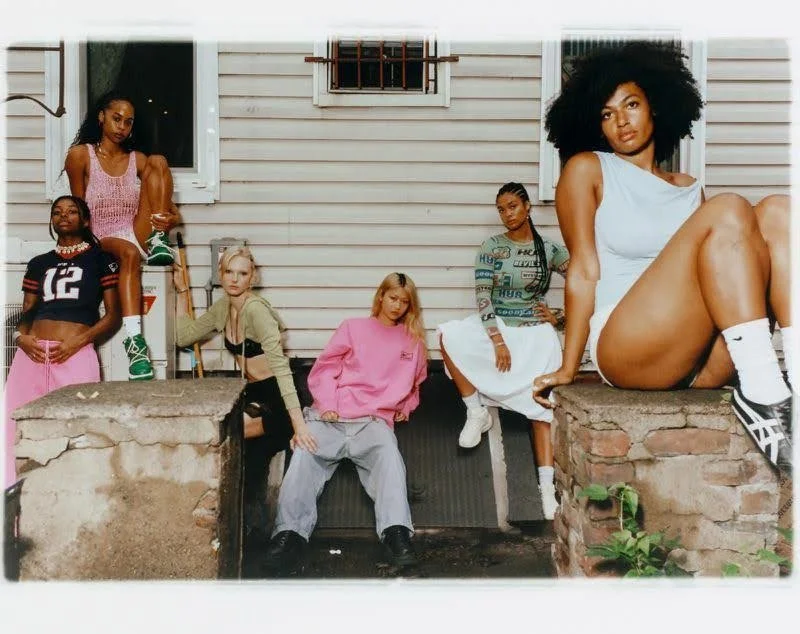
As we’ve recently passed the milestone of halfway through the decade, many fashion writers and enthusiasts are starting to share their various hypotheses on the clothes that have defined the first five years so far. The fads, trends, and pieces that we flaunt on social media will soon become the relics that our children will wrinkle their noses at in bewilderment, and the only justification that we’d have for them would be “Well, it was the 2020s.”
However, when I sat down and reminisced about the various trends of this past decade, I couldn’t help but notice that the 2020s didn’t have the same unique yet distinct aesthetics that the 2000s or even the 2010s had. Fashion editor Lauren Sherman is quoted in Elle Magazine, declaring that "The look of the 2020s is a black top, light-blue jeans and black boots” (Sherman, 2025). The sentence sent a shiver down my spine–will unprecedented uniformity be what this generation is remembered for? It sent me down the rabbit hole, and I was craving to reach a distinctive and definitive conclusion regarding our generation’s fashion imprint.
Much to my dismay, I didn’t find that simple answer. There isn’t something particular to this decade that would define us, our unique youth style, the visual markers of a generational identity. I believe that this could be for a couple of reasons stemming from the same, multifaceted seed: social media. These platforms have changed the fashion landscape forever, and have simultaneously assumed the role of and impeded Gen-Z’s ability to define themselves as a generation aesthetically. I believe that social media has caused a tendency toward nostalgic trends rather than forward-thinking ones, the rapidly increasing rate of consumption via influencing and microtrends, and diluted subcultural spaces that are usually a major source of an era’s unique style.
Upon my research for a cohesive 2020s fashion timeline, the overwhelmingly popular answer for the decade’s leading trend thus far has been the Y2K Revival. As Boutanya Chokrane and Christina Perez write for Vogue Magazine, “So what prompted the re-emergence of Y2K fashion now? Like most current fashion trends, it started bubbling under—with a little help from Gen-Z influencers—on TikTok, where e-girls with retro hairstyles, beaded chokers, and butterfly clips have been happily dancing to ‘Mr Brightside’ and lamenting that they were ‘born in the wrong decade’” (2025, Vogue). Spearheaded by a generation’s collective nostalgic yearning and the power of the internet, the Y2K revival has become the foremost defining trend in Gen Z’s youthful style. Though I don’t have to tell you, I’m sure you’ve seen it first hand: the ultra low rise jeans, the dresses over flare jeans, ballet flats, kitten heels, and capri pants. While it is nowhere near uncommon for a generation to turn to the past for inspiration (fashion is cyclical, the trends of the 2000s largely looked to the 90s, who in turn looked to the 70s), there is an important distinction between taking inspiration versus aiming to imitate this era. It is this–the desire to imitate and replicate–that I believe is the fault of social media, more specifically, the impact of content creators.
The rate of fashion consumption has undoubtedly been accelerated as a result of social media. Not too long ago, the rule of thumb in the fashion world was that the lifespan of a trend cycle would be around 20 years. That has since been completely thrown out the window–just think of how many different fashion and beauty fads have been cycled through the past five years. Concho belts, puka shell necklaces, wide leg pants, laminated brows, corset tops…all of these took the internet and people’s closets by storm, only to all but vanish after less than a year. That doesn’t even include the niche aesthetic trends started by social media: clean girl, mob wife, office siren, blokette, the list goes on and on.
The rate at which trends are expiring is not only damaging to our generational identity, but it is also damaging to our generation’s future. This cycle has been proliferated by fast fashion trends, which capitalize on internet fads through rapidly releasing massive quantities of trendy clothing by cutting corners in terms of the clothing’s quality, the environmental impact, and the ethical treatment of garment workers. Fast fashion brands like Shein, Temu, H&M, and Zara rake in massive amounts of money as the trend takes its course, then refuse to be held accountable for the inevitable amount of waste that comes when people are buying new clothes every other month, when there’s a newer, hotter fad. This rampant consumerism, as a consequence of late-stage capitalism, is contributing to an era of uniformity.
On the topic of uniformity, social media and rapid consumerism have also resulted in the dilution of subcultural movements, which are the wellsprings of decade-defining style. The ‘90s would be nothing without the grunge, hip-hop, and skating subcultures, the ‘80s would be nothing without the Goths and the New Romantics, and the ‘70s would be nothing without disco. In their respective eras, members of a subculture would have to be aware of the subcultural spaces and norms to take inspiration from the style of the movement. Though in the 2020s, with apps like Pinterest and TikTok providing endless streams of subcultural archives, access to the core community is no longer required to present a certain way. More people than ever are looking the part without acting the part. People can look like any time, any place, any moment without having the personal connection that is necessary for an authentic sense of style. It is this that I believe contributes to the most unfortunate fashion trends of the 2020s–homogeneity, performativity, and disconnection.
So, is all hope lost? Are we doomed to a fate of fast fashion trend cycles, imitative and inauthentic fashion practices, and a lack of quality and authenticity? I don’t believe so. The fashion of a generation is shaped by the sociopolitical climate in which that generation endures, and this generation has faced unprecedented turbulence in that department. Our country is enveloped in the throes of fascism, our nations are backsliding into eras of conservatism, our globe is getting hotter by the minute, our future has never been more uncertain, and where does that leave us? As always, some will succumb to the roaring tide toward traditionalism. Those who will fall in line with the tradwife trends, the hemline index, the revival of heroin chic, and rigid bodily expectations. However, there will always be people who will express themselves freely no matter the cost, and I believe the number of these people has never been higher, more educated, or more vocal than in Gen Z.
As strong as this surge toward uniformity is, I believe that the explosion of originality and self-expression will be one of equal strength, if not stronger. With the loss of traditional subcultural norms, new ones will arise from their ashes. The communities at the forefront of decade-defining style–black people, people of color, queer people, neurotypical people–will exist for as long as humanity does. Our government will continue to try to erase the indelible contributions these communities have had on our world (especially in regards to fashion), but they can never stop the flow of self-expression and compassion. When corporations find that mimicking subcultural style is no longer profitable in an alt-right country, people will turn to local and community-sourced fashion. People will go underground. People will see the power of a community outside of social media in a surveillance state. Only time will tell how this generation should define its own style and identity, though if I were to take a guess, we will be remembered for an uninhibited self-expression. An amalgamation of movements, eras, lifestyles, and perspectives all coming together to inform nonconformist style and combat this ongoing trend toward uniformity.